The Future of Education: How Technology Is Transforming Learning Worldwide
Education has always evolved alongside human progress. From chalkboards to printed textbooks, and now to digital classrooms, each era has reshaped how knowledge is shared. Today, we are witnessing one of the most significant transformations in the history of education: the rise of technology-driven learning. Across the globe, digital tools are redefining how students learn, how teachers teach, and how institutions operate. The future of education is no longer confined to physical classrooms—it is dynamic, inclusive, and deeply connected through technology.
The Digital Shift in Global Education
Technology has rapidly become an essential part of modern education systems. High-speed internet, smartphones, tablets, and cloud-based platforms have made learning more accessible than ever before. Students can now attend virtual classes, access digital libraries, and collaborate with peers across continents.
This digital shift has proven especially valuable during global disruptions, such as pandemics or natural disasters, when traditional schooling is interrupted. Online learning platforms ensure continuity, allowing education to move forward regardless of physical location. As a result, education is becoming more flexible, resilient, and scalable worldwide.
Online Learning and Virtual Classrooms
One of the most visible changes in education is the rise of online learning. Virtual classrooms enable students to attend lessons from anywhere, breaking geographical barriers. Platforms offering video lectures, live discussions, and recorded sessions have transformed how education is delivered.
Online learning also supports self-paced education. Students can revisit lessons, pause videos, and learn at a speed that suits their individual needs. This flexibility benefits not only full-time students but also working professionals, lifelong learners, and those with limited access to traditional institutions.
Moreover, Massive Open Online Courses (MOOCs) have democratized education by offering high-quality courses from top universities at little or no cost. This global access is narrowing educational gaps and empowering learners worldwide.
Artificial Intelligence in Education
Artificial Intelligence (AI) is playing a growing role in shaping the future of education. AI-powered systems can personalize learning experiences by analyzing student behavior, strengths, and weaknesses. Instead of a one-size-fits-all approach, students receive customized content and feedback tailored to their learning styles.
AI also assists teachers by automating administrative tasks such as grading, attendance tracking, and performance analysis. This allows educators to focus more on teaching, mentoring, and supporting students emotionally and academically.
Additionally, AI-driven chatbots and virtual tutors provide instant support, answering student questions and guiding them through complex topics. As AI continues to advance, its role in education will become even more impactful.
Personalized and Adaptive Learning
Technology enables personalized learning on a scale never before possible. Adaptive learning platforms adjust lessons based on student performance, ensuring that learners are neither bored nor overwhelmed. If a student struggles with a topic, the system provides additional resources; if they excel, it offers more advanced material.
This personalized approach improves engagement and learning outcomes. Students feel more motivated when education aligns with their abilities and interests. For educators, data-driven insights help identify learning gaps early, enabling timely intervention.
Personalized learning also supports inclusivity, catering to students with diverse learning needs, including those with disabilities or language barriers.
The Role of Virtual Reality and Augmented Reality
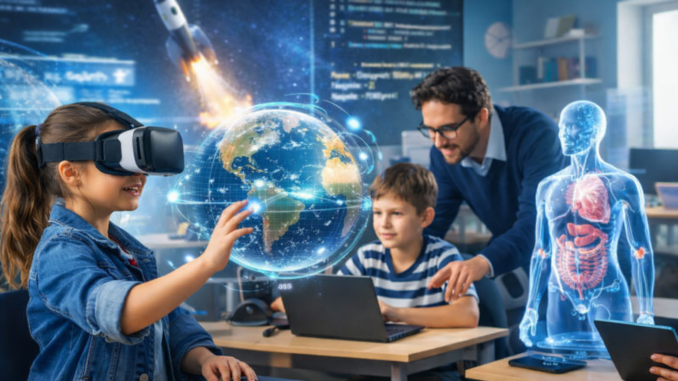
Virtual Reality (VR) and Augmented Reality (AR) are redefining experiential learning. These immersive technologies allow students to explore environments and concepts that would otherwise be inaccessible. For example, students can take virtual field trips to historical landmarks, explore the human body in 3D, or conduct science experiments in simulated labs.
VR and AR make learning more engaging and interactive, improving retention and understanding. Subjects like science, medicine, engineering, and history benefit greatly from these visual and hands-on experiences.
As the cost of VR and AR technology decreases, their adoption in classrooms worldwide is expected to grow significantly.
Technology and Teacher Empowerment
While technology is transforming education, teachers remain at the heart of the learning process. Rather than replacing educators, technology empowers them with better tools and resources. Digital platforms provide access to vast educational content, interactive teaching aids, and real-time student analytics.
Teachers can use technology to collaborate with colleagues globally, share best practices, and participate in professional development programs. Online communities and training courses help educators stay updated with the latest teaching methods and technological advancements.
By reducing administrative burdens and enhancing instructional capabilities, technology allows teachers to focus on what matters most—guiding and inspiring students.
Bridging the Global Education Gap
One of the most promising aspects of educational technology is its potential to bridge global education gaps. In underserved and remote regions, mobile devices and internet connectivity provide access to learning resources that were previously unavailable.
Digital education initiatives are helping children and adults gain literacy, vocational skills, and higher education opportunities. Governments, non-profit organizations, and private companies are investing in digital infrastructure to promote educational equity.
However, challenges such as the digital divide, limited internet access, and lack of devices still exist. Addressing these issues is essential to ensure that technological advancements benefit everyone equally.
Lifelong Learning in the Digital Age
The future of education extends beyond traditional schooling. In a rapidly changing world, lifelong learning has become essential. Technology supports continuous education by offering online certifications, micro-credentials, and skill-based courses.
Professionals can upskill or reskill to remain competitive in evolving job markets. Digital platforms enable learners of all ages to explore new interests, develop talents, and adapt to emerging industries.
This shift toward lifelong learning promotes adaptability, innovation, and personal growth, making education a continuous journey rather than a fixed phase of life.
Challenges and Ethical Considerations
Despite its many benefits, technology-driven education also presents challenges. Data privacy, cybersecurity, and ethical use of AI are major concerns. Protecting student information and ensuring transparency in data usage are critical responsibilities for educational institutions.
Additionally, excessive screen time and reduced social interaction can impact student well-being. Striking a balance between digital and human-centered learning is essential.
Educators and policymakers must work together to create ethical frameworks that guide the responsible use of technology in education.
The Future Outlook of Education Technology
Looking ahead, the future of education will be shaped by innovation, collaboration, and inclusivity. Emerging technologies such as blockchain for credential verification, advanced AI tutors, and global learning networks will further transform education systems.
Hybrid learning models, combining online and in-person education, are likely to become the norm. These models offer flexibility while preserving the social and emotional benefits of traditional classrooms.
As technology continues to evolve, education will become more personalized, accessible, and aligned with the needs of a global society.
Conclusion
The future of education is being reimagined through technology. From online learning and artificial intelligence to virtual reality and personalized education, digital tools are reshaping how knowledge is delivered and experienced worldwide. While challenges remain, the potential benefits far outweigh the obstacles.
By embracing technology thoughtfully and inclusively, education systems can empower learners, support educators, and bridge global learning gaps. The transformation of education is not just about innovation—it is about creating a more equitable, flexible, and effective learning environment for generations to come.