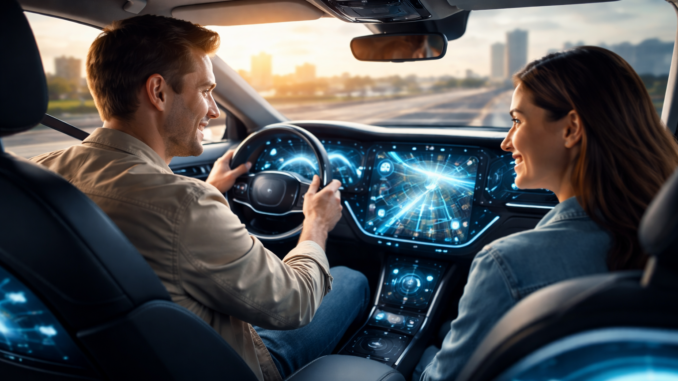
The Future of Automotive Technology: How Smart Cars Are Transforming Everyday Driving
The automotive industry is undergoing one of the most significant transformations in its history. What was once focused primarily on mechanical performance and fuel efficiency has evolved into a technology-driven ecosystem where software, connectivity, automation, and artificial intelligence play central roles. Smart cars are no longer a futuristic concept; they are becoming a normal part of everyday driving. From advanced driver assistance systems to fully connected vehicles, automotive technology is reshaping how people drive, commute, and interact with their vehicles.
This article explores the future of automotive technology and explains how smart cars are changing daily driving experiences, improving safety, enhancing convenience, and redefining mobility for the modern world.
What Are Smart Cars?
Smart cars are vehicles equipped with advanced digital technologies that enable automation, connectivity, and data-driven decision-making. Unlike traditional cars, smart vehicles rely on sensors, cameras, software, and artificial intelligence to monitor their surroundings, assist drivers, and communicate with other devices or infrastructure.
Key features of smart cars include driver assistance systems, infotainment platforms, vehicle-to-everything (V2X) communication, cloud connectivity, and over-the-air software updates. Together, these technologies create a more intelligent and responsive driving experience.
Advanced Driver Assistance Systems (ADAS)
One of the most impactful developments in automotive technology is the widespread adoption of Advanced Driver Assistance Systems. ADAS features are designed to enhance safety and reduce human error, which is a leading cause of road accidents worldwide.
Common ADAS technologies include adaptive cruise control, lane-keeping assistance, blind-spot monitoring, automatic emergency braking, and parking assistance. These systems use cameras, radar, and lidar sensors to detect potential hazards and support the driver in real time.
As these technologies continue to improve, smart cars are becoming safer and easier to operate, especially in heavy traffic and challenging driving conditions. In the future, ADAS will serve as a critical foundation for fully autonomous vehicles.
The Rise of Autonomous Driving
Autonomous driving is one of the most talked-about aspects of future automotive technology. While fully self-driving cars are still under development, significant progress has already been made. Many modern vehicles now offer partial automation, such as highway driving assistance and automated parking.
Autonomous systems rely on artificial intelligence and machine learning to analyze data from sensors and make driving decisions. As technology advances and regulations evolve, autonomous vehicles are expected to reduce traffic accidents, improve fuel efficiency, and provide mobility solutions for elderly and disabled individuals.
Although widespread adoption may take time, autonomous driving will fundamentally change how people perceive car ownership and transportation.
Connectivity and the Internet of Vehicles
Smart cars are increasingly connected to the internet, creating what is known as the Internet of Vehicles (IoV). This connectivity allows vehicles to communicate with smartphones, smart homes, traffic systems, and even other vehicles.
Connected cars can provide real-time traffic updates, weather alerts, navigation optimization, and remote diagnostics. Drivers can control certain vehicle functions, such as locking doors or starting the engine, directly from their mobile devices.
In the future, vehicle-to-vehicle (V2V) and vehicle-to-infrastructure (V2I) communication will improve traffic flow and reduce congestion by enabling cars to share information about road conditions and potential hazards.
Artificial Intelligence in Smart Cars
Artificial intelligence is at the core of modern automotive innovation. AI-powered systems analyze vast amounts of data to improve vehicle performance, safety, and personalization.
Voice assistants in smart cars allow drivers to control navigation, climate settings, and entertainment systems without taking their hands off the wheel. AI algorithms also learn driver preferences, adjusting seating positions, temperature, and music automatically.
Predictive maintenance is another major benefit of AI. Smart cars can monitor vehicle components and alert drivers to potential issues before they become serious problems, saving time and reducing repair costs.
Electric Vehicles and Smart Technology Integration
The future of automotive technology is closely linked to the rise of electric vehicles. EVs naturally integrate smart systems due to their reliance on software and electronic controls.
Smart electric cars offer features such as battery management systems, energy-efficient routing, and regenerative braking optimization. Drivers can monitor battery health, charging status, and energy consumption through mobile apps or onboard displays.
As charging infrastructure becomes more intelligent, smart cars will automatically locate charging stations, schedule charging during off-peak hours, and integrate with renewable energy sources, making electric mobility more practical and sustainable.
Enhanced Infotainment and In-Car Experience
Modern drivers expect their vehicles to provide the same level of digital convenience as their smartphones. Smart cars now feature advanced infotainment systems with large touchscreens, seamless smartphone integration, and cloud-based services.
Features such as real-time navigation, streaming services, voice control, and personalized user profiles improve comfort and entertainment during daily commutes and long trips. Future infotainment systems will likely include augmented reality displays and immersive interfaces that provide essential information without distracting the driver.
The in-car experience is becoming more personalized and interactive, transforming vehicles into connected living spaces.
Improved Safety Through Smart Sensors
Safety remains a top priority in automotive innovation. Smart cars are equipped with multiple sensors that continuously monitor the environment inside and outside the vehicle.
These sensors detect pedestrians, cyclists, road signs, and obstacles, helping prevent collisions. Interior sensors can monitor driver alertness and issue warnings if fatigue or distraction is detected.
As sensor technology becomes more affordable and accurate, smart safety features will become standard across all vehicle segments, significantly reducing accident rates worldwide.
Data Security and Privacy Challenges
While smart cars offer numerous benefits, they also raise concerns about data security and privacy. Connected vehicles collect and transmit large amounts of data, including location information, driving behavior, and personal preferences.
Automotive manufacturers and software providers must implement strong cybersecurity measures to protect users from hacking and unauthorized access. Transparent data policies and user control over information sharing will be essential to building trust in smart automotive technology.
Addressing these challenges will be a key factor in the long-term success of connected and autonomous vehicles.
The Impact on Everyday Driving
Smart cars are already transforming everyday driving in practical ways. Traffic-aware navigation reduces commute times, while parking assistance simplifies urban driving. Safety systems provide peace of mind, especially for families and new drivers.
As technology continues to evolve, driving will become more efficient, less stressful, and more accessible. Vehicles will adapt to individual needs and respond intelligently to changing road conditions, making transportation smoother and safer for everyone.
The Road Ahead for Automotive Technology
The future of automotive technology is defined by innovation, sustainability, and connectivity. Smart cars will continue to evolve, incorporating advanced AI, autonomous capabilities, and deeper integration with digital ecosystems.
As governments and industries invest in smart infrastructure and clean energy, the automotive landscape will shift toward intelligent, eco-friendly mobility solutions. The transformation will not only change how vehicles operate but also how people interact with transportation as a whole.
Conclusion
Smart cars are redefining the automotive industry and transforming everyday driving experiences. Through advanced safety systems, connectivity, artificial intelligence, and electric integration, modern vehicles are becoming more intelligent, efficient, and user-friendly.
As automotive technology continues to advance, smart cars will play a central role in shaping the future of mobility. For drivers, this means safer roads, greater convenience, and a more connected driving experience than ever before.