How Electric and Hybrid Vehicles Are Transforming the Automotive Industry
The automotive industry is undergoing one of the most significant transformations in its history. At the center of this change are electric vehicles (EVs) and hybrid vehicles, which are redefining how cars are designed, manufactured, sold, and driven. As governments push for lower emissions and consumers demand cleaner, smarter transportation, electric and hybrid technologies are rapidly replacing traditional internal combustion engines.
This shift is not just about changing fuel sources—it is reshaping the entire automotive ecosystem. From manufacturing and supply chains to infrastructure, employment, and consumer behavior, electric and hybrid vehicles are transforming the automotive industry in profound ways.
The Rise of Electric and Hybrid Vehicles
Electric and hybrid vehicles have moved far beyond their early experimental stages. Once seen as niche products, they are now mainstream options across nearly every vehicle category, including compact cars, SUVs, luxury sedans, and even commercial trucks.
Several factors have contributed to this rapid growth:
- Rising fuel costs
- Stricter environmental regulations
- Advances in battery technology
- Increased awareness of climate change
- Government incentives and subsidies
By combining electric motors with traditional engines—or eliminating engines altogether—automakers are delivering vehicles that are more efficient, quieter, and environmentally friendly.
Reducing Carbon Emissions and Environmental Impact
One of the most important ways electric and hybrid vehicles are transforming the automotive industry is by significantly reducing carbon emissions. Transportation has long been a major contributor to global greenhouse gas emissions, and electrification offers a practical solution.
Environmental benefits include:
- Zero tailpipe emissions for electric vehicles
- Lower emissions for hybrid vehicles compared to gasoline cars
- Reduced air pollution in urban areas
- Decreased dependence on fossil fuels
As renewable energy sources become more common, the environmental benefits of EVs grow even stronger. This shift aligns closely with global sustainability goals and climate commitments.
Battery Technology Driving Innovation
Battery technology is the backbone of electric and hybrid vehicles. Over the past decade, improvements in lithium-ion batteries have dramatically increased driving range while reducing costs and charging times.
Key battery advancements:
- Higher energy density for longer range
- Faster charging capabilities
- Improved durability and lifespan
- Safer battery management systems
The automotive industry is also investing heavily in next-generation solutions such as solid-state batteries, which promise even better performance. These innovations are enabling automakers to design vehicles that meet consumer expectations for convenience and reliability.
Transforming Automotive Manufacturing and Supply Chains
Electric and hybrid vehicles are changing how cars are built. Traditional vehicles rely on complex mechanical systems with hundreds of moving parts. In contrast, electric vehicles have fewer components, simpler drivetrains, and more software-driven systems.
Manufacturing transformations include:
- Simplified vehicle assembly
- Increased use of automation and robotics
- Greater reliance on software and electronics
- New supply chains focused on batteries and semiconductors
As a result, automakers are retooling factories and retraining workers to adapt to electric vehicle production. This shift is reshaping the global automotive workforce and supplier networks.
Changing Consumer Behavior and Expectations
Electric and hybrid vehicles are also influencing how consumers think about car ownership. Buyers are no longer focused solely on horsepower and engine size; instead, they consider efficiency, charging convenience, and digital features.
Consumer trends driving adoption:
- Lower operating and maintenance costs
- Quiet and smooth driving experience
- Access to incentives and tax benefits
- Growing charging infrastructure
Hybrid vehicles play an important role in easing the transition, offering improved fuel efficiency without requiring full reliance on charging stations. Together, EVs and hybrids are expanding consumer choice and accelerating adoption.
The Growth of Charging and Energy Infrastructure
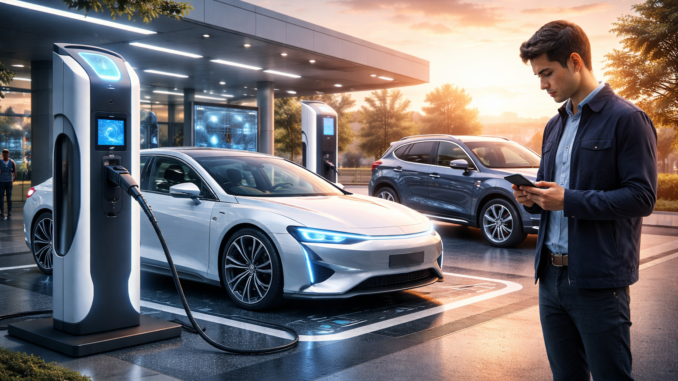
The expansion of electric vehicles is driving massive investment in charging infrastructure. Governments, utilities, and private companies are working together to build networks that support widespread EV adoption.
Infrastructure developments include:
- Fast-charging stations along highways
- Home and workplace charging solutions
- Smart charging systems integrated with the power grid
- Wireless and bidirectional charging research
This growing ecosystem supports not only vehicles but also broader energy innovation. Electric vehicles are becoming part of smart energy systems, capable of storing and sharing power.
Software and Connectivity Redefining Vehicles
Electric and hybrid vehicles are highly software-dependent, making them central to the rise of connected and intelligent cars. Software controls everything from battery management to navigation and driver assistance systems.
Software-driven features include:
- Over-the-air software updates
- Advanced driver assistance systems (ADAS)
- Real-time energy usage monitoring
- Smart infotainment and connectivity
This shift is turning cars into digital platforms rather than purely mechanical machines. Automakers are increasingly operating like technology companies, delivering continuous improvements through software updates.
Impact on the Global Automotive Market
Electric and hybrid vehicles are reshaping competition in the automotive industry. New companies focused entirely on electric mobility are challenging traditional manufacturers, while established brands race to electrify their lineups.
Market changes include:
- Increased competition and innovation
- Strategic partnerships with battery and tech firms
- Entry of new players into the automotive space
- Faster product development cycles
Countries that lead in electric vehicle adoption are also positioning themselves as leaders in future mobility. This global race is accelerating innovation and investment across the industry.
Hybrid Vehicles as a Transitional Technology
While fully electric vehicles represent the future, hybrid vehicles play a critical role in the present. They bridge the gap between gasoline-powered cars and fully electric models.
Advantages of hybrid vehicles:
- Improved fuel efficiency
- Reduced emissions without charging anxiety
- Familiar driving experience
- Lower upfront costs compared to EVs in some markets
Hybrids help consumers transition gradually while infrastructure and technology continue to mature. Their popularity underscores the importance of flexible solutions in the automotive transformation.
Economic and Employment Impacts
The shift to electric and hybrid vehicles is also transforming automotive employment and economics. New skills are required in areas such as battery engineering, software development, and electronics manufacturing.
Economic effects include:
- Creation of new jobs in clean energy and technology
- Decline in demand for traditional engine components
- Investment in education and workforce retraining
- Growth of local and regional supply chains
Although the transition presents challenges, it also creates opportunities for innovation-driven economic growth.
Challenges Facing Electric and Hybrid Vehicles
Despite their rapid progress, electric and hybrid vehicles still face challenges that the industry must address.
Key challenges include:
- Limited charging infrastructure in some regions
- Battery recycling and resource sustainability
- Higher upfront costs for certain models
- Grid capacity and energy management concerns
Ongoing research, policy support, and technological innovation are essential to overcoming these obstacles and ensuring long-term success.
The Future of the Automotive Industry
Electric and hybrid vehicles are no longer optional alternatives—they are central to the future of the automotive industry. As technology continues to evolve, vehicles will become cleaner, smarter, and more integrated into digital and energy ecosystems.
In the coming years, we can expect:
- Wider EV adoption across all markets
- Continued improvement in battery performance
- Stronger environmental regulations
- Greater collaboration between automakers and tech companies
The transformation driven by electric and hybrid vehicles is setting the foundation for a more sustainable and efficient transportation system.
Conclusion
Electric and hybrid vehicles are fundamentally transforming the automotive industry. By reducing emissions, reshaping manufacturing, redefining consumer expectations, and driving technological innovation, they are changing how the world moves.
As adoption continues to grow, these vehicles will play a critical role in building a cleaner, smarter, and more sustainable future. The automotive industry’s evolution is well underway—and electric and hybrid vehicles are leading the charge.