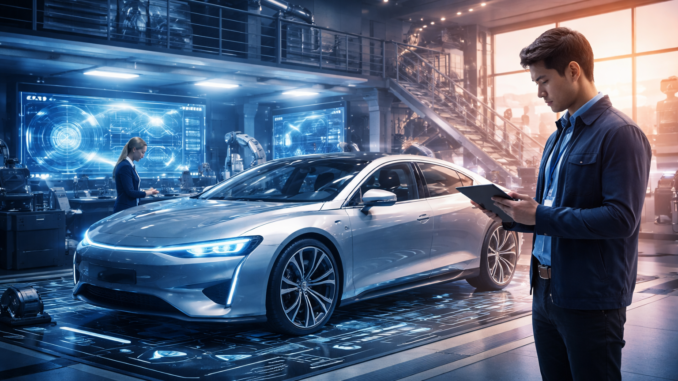
Top Automotive Technology Trends Shaping the Future of Cars in 2026
The automotive industry is entering one of the most transformative periods in its history. By 2026, rapid advances in software, artificial intelligence, electrification, and connectivity are redefining what cars are, how they are built, and how people interact with them. Vehicles are no longer just mechanical machines; they are evolving into intelligent, connected, and sustainable mobility platforms.
From electric powertrains and autonomous driving features to smart manufacturing and vehicle-to-everything (V2X) communication, automotive technology trends in 2026 are shaping the future of cars in powerful ways. This article explores the most important innovations driving this change and what they mean for consumers, manufacturers, and the global transportation ecosystem.
1. Electric Vehicles Becoming the Industry Standard
Electric vehicles (EVs) are no longer a niche market. By 2026, EV adoption is accelerating worldwide due to stricter emissions regulations, improved battery technology, and growing consumer awareness of sustainability.
Key EV advancements in 2026:
- Longer driving range: New battery chemistries allow many EVs to exceed 500–600 km on a single charge.
- Faster charging: Ultra-fast charging stations can replenish up to 80% of battery capacity in under 20 minutes.
- Lower costs: Battery prices continue to fall, making electric cars more affordable for mass markets.
Automakers are expanding their electric lineups across all vehicle segments, including SUVs, pickup trucks, and commercial vehicles. As infrastructure improves, EVs are becoming a practical choice for everyday driving.
2. Solid-State Batteries Revolutionizing Energy Storage
One of the most exciting automotive technology trends shaping the future of cars is the development of solid-state batteries. Unlike traditional lithium-ion batteries, solid-state batteries use solid electrolytes instead of liquid ones.
Benefits of solid-state batteries:
- Higher energy density
- Improved safety with lower fire risk
- Faster charging times
- Longer battery lifespan
By 2026, early commercial deployment of solid-state batteries is expected in premium and high-performance vehicles. This technology has the potential to eliminate many of the limitations currently associated with electric vehicles.
3. Advanced Driver Assistance Systems (ADAS) Becoming Smarter
While fully autonomous cars are still under development, Advanced Driver Assistance Systems (ADAS) are rapidly improving. In 2026, most new vehicles include intelligent safety features that actively assist drivers in real time.
Common ADAS features in 2026:
- Adaptive cruise control with AI prediction
- Lane-keeping and lane-changing assistance
- Automatic emergency braking
- Driver monitoring systems using cameras and sensors
These systems reduce accidents, enhance road safety, and prepare the industry for higher levels of automation. ADAS technology is becoming a key selling point for both luxury and mainstream vehicles.
4. Artificial Intelligence Transforming the Driving Experience
Artificial intelligence (AI) plays a central role in modern automotive innovation. By 2026, AI is deeply integrated into vehicle operation, safety, personalization, and manufacturing.
How AI is used in cars:
- Predictive maintenance alerts
- Personalized infotainment and climate settings
- Voice-controlled digital assistants
- Real-time traffic and route optimization
AI allows vehicles to learn from driver behavior and adapt accordingly, creating a more intuitive and comfortable driving experience. This shift is turning cars into intelligent companions rather than simple transportation tools.
5. Autonomous Driving Progressing Toward Level 4
Autonomous vehicle technology continues to advance steadily. While fully driverless cars are not yet widespread, Level 3 and Level 4 autonomy is becoming more common in controlled environments by 2026.
Autonomous driving highlights:
- Highway autopilot systems
- Hands-free driving in designated zones
- Automated parking and valet features
- AI-powered perception using lidar, radar, and cameras
Regulatory approval and infrastructure readiness vary by region, but autonomous features are expanding rapidly. These technologies promise to reduce traffic congestion, human error, and transportation costs in the long term.
6. Vehicle-to-Everything (V2X) Communication
Vehicle-to-Everything (V2X) communication enables cars to communicate with other vehicles, traffic infrastructure, pedestrians, and networks. This technology is shaping the future of connected transportation in 2026.
V2X applications include:
- Collision avoidance warnings
- Traffic signal coordination
- Real-time hazard alerts
- Improved traffic flow and efficiency
By enabling real-time data exchange, V2X improves road safety and lays the foundation for smart cities. Connected vehicles can make smarter decisions beyond what onboard sensors alone can achieve.
7. Software-Defined Vehicles and Over-the-Air Updates
Cars in 2026 are increasingly software-defined. Instead of relying solely on hardware upgrades, manufacturers now deliver new features and improvements through over-the-air (OTA) software updates.
Advantages of software-defined vehicles:
- Continuous feature enhancements
- Improved cybersecurity
- Remote diagnostics and bug fixes
- Customizable vehicle performance
This approach extends the life of vehicles and allows automakers to innovate faster. Drivers benefit from a car that improves over time, much like a smartphone.
8. Sustainable and Smart Manufacturing Technologies
Sustainability is not limited to vehicle usage—it also extends to how cars are built. In 2026, automotive manufacturing is embracing smart factories and eco-friendly processes.
Manufacturing trends include:
- Increased use of recycled and bio-based materials
- AI-driven production optimization
- 3D printing for lightweight components
- Reduced carbon footprints in supply chains
These innovations help automakers meet environmental regulations while lowering costs and improving efficiency. Sustainable manufacturing is becoming a competitive advantage in the global automotive market.
9. Next-Generation Infotainment and Digital Cockpits
The in-car experience is evolving rapidly. Digital cockpits in 2026 feature large displays, augmented reality, and seamless smartphone integration.
Key infotainment trends:
- Curved OLED and HUD displays
- Augmented reality navigation
- Cloud-connected entertainment platforms
- Enhanced voice and gesture controls
These technologies improve driver focus, reduce distractions, and deliver a premium user experience. Cars are becoming digital spaces where productivity and entertainment coexist.
10. Cybersecurity and Data Protection in Connected Cars
As vehicles become more connected, cybersecurity becomes critical. Automotive technology trends in 2026 place strong emphasis on protecting vehicle systems and user data.
Cybersecurity measures include:
- Encrypted communication protocols
- Secure OTA updates
- AI-based threat detection
- Compliance with global data privacy laws
Manufacturers are investing heavily in cybersecurity to ensure trust and safety in connected and autonomous vehicles. Secure systems are essential for the future of digital mobility.
Conclusion: The Road Ahead for Automotive Innovation
The future of cars in 2026 is defined by intelligence, sustainability, and connectivity. Automotive technology trends such as electric vehicles, AI integration, autonomous driving, and software-defined platforms are reshaping the industry from the ground up.
As these technologies mature, cars will become safer, cleaner, and more personalized than ever before. For consumers, this means better performance, lower environmental impact, and a smarter driving experience. For manufacturers, it represents a shift toward innovation-driven competition and long-term sustainability.
The automotive revolution is well underway—and 2026 marks a critical milestone in shaping the future of mobility.